
Inside Galata Tower: Floor-by-Floor Guide
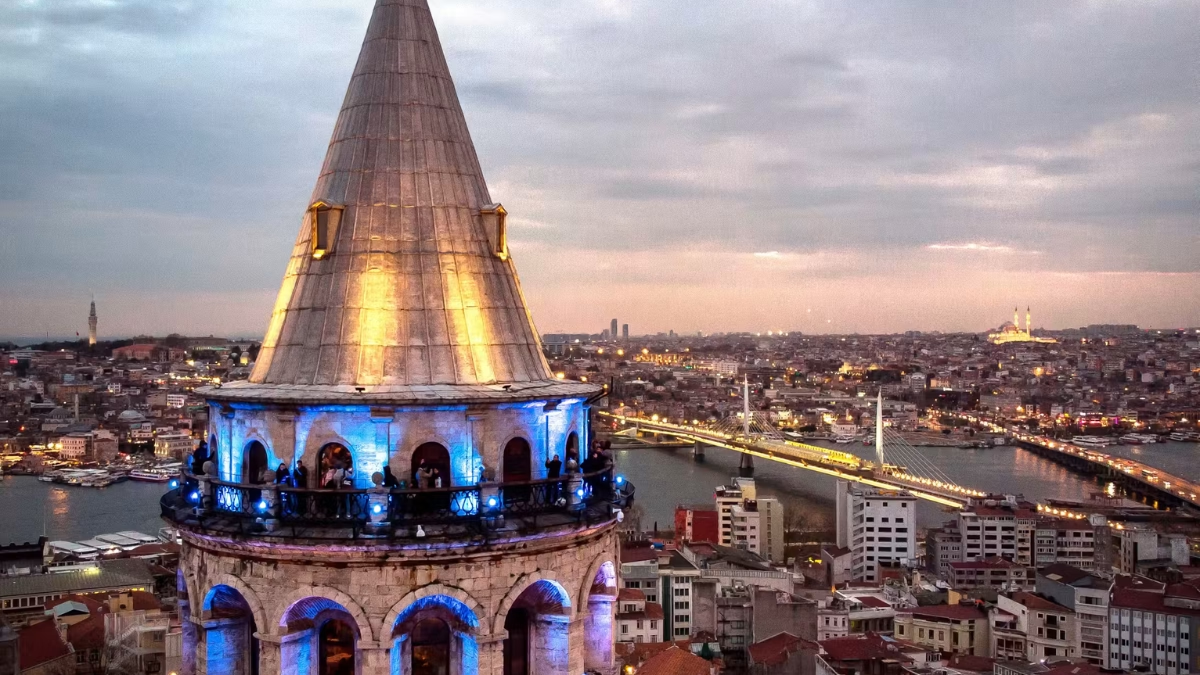
Galata Tower has nine floors. An express elevator carries you to the seventh floor, past museum and exhibition levels tracing the tower’s Genoese and Ottoman past, with a café near the top. From the seventh floor, two flights of stairs lead up to the observation deck — a wraparound balcony with a 360-degree panorama over Istanbul. Allow 45–60 minutes for the full climb.
Most visitors picture Galata Tower as a single viewpoint, but the 67-metre Genoese tower is really a slim vertical museum: nine floors stacked inside a cylindrical stone shaft, capped by the observation deck everyone comes for. Knowing how the floors are arranged — and how the elevator and stairs split the journey — helps you pace the visit and avoid the crush that builds near the top before sunset.
This guide walks you up the tower level by level, from the entrance to the 360-degree balcony, and explains exactly where the express elevator drops you and where you take over on foot.
Galata Tower Floors at a Glance
| Level | What’s there | How you reach it |
|---|---|---|
| Ground / entrance | Ticket check, base of the shaft | Street level |
| Lower–middle floors | Museum and exhibition displays | Express elevator (passes through) |
| Upper floors | Café / refreshment level | Express elevator |
| 7th floor | Elevator arrival point | Express elevator stops here |
| Final two levels | Stairs to the observation deck | Two flights of stairs |
| Observation deck | 360° wraparound balcony | Top of the stairs |
The tower is a historic structure, so the internal layout is narrow and the museum content is spread thinly across the floors. Confirm any current exhibition details on the official site before you visit.
How the Elevator and Stairs Work
A single express elevator runs up the core of Galata Tower to the seventh floor, which is as high as it goes. From there you climb the final two flights of stairs to reach the observation deck at the top. There is no lift for those last two levels, so the deck itself is not fully step-free — the stairs are the one unavoidable climb of the visit.
The elevator is the key to understanding the tower’s flow. Because the shaft is so narrow, one lift shuttles everyone up and down, and it can bottleneck at busy times. It carries you straight to the seventh floor rather than stopping at every level, so you don’t see much of the lower museum floors on the way up unless you choose to walk parts of it.
From the seventh floor, the last stretch is on foot: two short flights of stairs to the balcony. If steps are a concern, our Galata Tower accessibility guide explains what to expect, and the how long to spend guide helps you budget for elevator queues at peak times.
Ground Floor and Entrance
Your visit starts at street level, where the ticket is checked at the base of the shaft. This is the point where a skip-the-line ticket earns its keep, since the entrance queue can be long before sunset and access higher up is capped. If you want to understand what the tower actually is before you go in — a 14th-century Genoese watchtower turned Ottoman fire-lookout — our Galata Tower history guide sets the scene.
From the entrance you’re directed to the elevator. There’s little to linger over at ground level itself; the tower’s interest begins as you rise through the floors above.
The Museum and Exhibition Floors
The lower and middle floors of Galata Tower house its museum: a series of compact exhibition spaces covering the tower’s Genoese origins, its centuries as an Ottoman fire-lookout, and the legend of the aviator Hezârfen Ahmed Çelebi. Signage is limited, so the included audio guide is the best way to make sense of the displays as you pass through.
Since its 2020 reopening as a museum under Turkey’s Ministry of Culture and Tourism, the tower’s interior floors have carried exhibition content rather than shops or offices. The displays are modest in scale — this is a slender tower, not a sprawling gallery — and they trace the building’s long story from the Genoese colony of Galata through its Ottoman role watching for fires across the wooden city.
Because the museum floors have limited signage, the English audio-guide app included with the Galata Tower entry ticket does a lot of the interpretive work; bring earphones. If you’d rather have the history narrated live, a Galata & Genoese afternoon guided tour pairs the walk-up with a guide who fills in the Genoese Galata context.
The Café Level
Near the top of the tower, before the observation deck, is a café and refreshment level. It’s a welcome pause point after the elevator, and a place to catch your breath before the final stairs. Space is tight given the tower’s diameter, so it functions more as a quick-stop café than a full sit-down restaurant, and it can fill up around sunset.
For what’s actually on offer, opening patterns and whether it’s worth timing your visit around, see our dedicated Galata Tower café and restaurant guide. Prices and service can change, so treat it as a convenience rather than a dining destination.
The Observation Deck
The reward at the top is the wraparound balcony: a full 360-degree panorama over the Golden Horn, the Bosphorus and the historic peninsula, with Hagia Sophia, the Blue Mosque, Topkapı Palace and the Süleymaniye Mosque all visible on a clear day. It’s a narrow outdoor walkway that circles the tower, so it can feel crowded when the deck is at capacity.
Our Galata Tower observation deck guide covers the balcony in detail — what you see in each direction, the railings and the crowd flow — and once you’re up there, our photography guide helps you make the most of the light.
Pacing Your Climb
Because a visit runs about 45 to 60 minutes and the deck access is capped, the smart move is to time your arrival for a quieter window rather than the sunset rush. The elevator and the two flights of stairs are the two pinch points where queues form, so an early-morning or mid-afternoon visit means a smoother climb. Our best time to visit guide pinpoints the calmest hours within the tower’s long 8:30am–11:00pm day.
Frequently Asked Questions
How many floors does Galata Tower have?
Galata Tower has nine floors. The lower and middle levels hold the museum and exhibition displays, an upper level has a café, and the top is the observation deck. An express elevator serves the tower as far as the seventh floor, after which two flights of stairs complete the climb to the balcony. The whole visit typically takes 45 to 60 minutes.
Does Galata Tower have a lift?
Yes. A single express elevator runs up the core of the tower to the seventh floor. It’s the main way up, though because the shaft is narrow only one lift operates, so it can queue at busy times. The elevator does not reach the observation deck itself — the final two flights are stairs — so the very top is not fully step-free.
How many stairs are there at the top?
After the elevator reaches the seventh floor, you climb two flights of stairs to reach the observation deck. It’s a short but unavoidable climb, and there is no lift for these last two levels. If steps are difficult, plan around this and check current provision in our accessibility guide before you go.
What’s inside Galata Tower?
Inside is a compact museum spread across the tower’s floors, telling the story of the building as a 14th-century Genoese watchtower and later an Ottoman fire-lookout. There’s a café near the top and, above it, the observation deck. The displays are modest and signage is limited, so the included audio guide helps you follow the exhibits as you rise through the floors.
Which floor is the observation deck on?
The observation deck sits above the seventh floor, at the very top of the tower’s nine levels. The elevator takes you to the seventh floor, and you climb the final two flights of stairs to reach the wraparound balcony. From there the 360-degree view over Istanbul opens up in every direction.
Is there a café or restaurant inside?
Yes, there’s a café and refreshment level near the top of the tower, below the observation deck. Given the tower’s slim diameter it’s a compact space rather than a large restaurant, and it can get busy around sunset. Prices, menu and service can vary, so check on the day.
How long does it take to go up all the floors?
Allow about 45 to 60 minutes for the full visit. That covers the elevator, a look at the museum floors, the café level, the two flights of stairs and time on the observation deck. It runs longer around sunset, when the deck is busiest and the elevator queues, so add a buffer if you’re visiting at that popular hour.
Do I see the museum floors on the way up?
Not automatically. The express elevator carries you straight to the seventh floor rather than stopping at each exhibition level, so you don’t pass through the lower museum floors unless you choose to walk parts of the tower. Many visitors focus on the deck and the café; if the history interests you, the audio guide and the exhibition content reward a slower pace.
Is Galata Tower suitable for young children?
It can be, with care. The elevator does most of the work, but the final two flights of stairs and the narrow, capped observation deck need supervision, especially in a sunset crowd. A pushchair is awkward on the stairs. Our Galata Tower with kids guide covers timing and practicalities for visiting with children.
