
Landmarks You Can See from Galata Tower
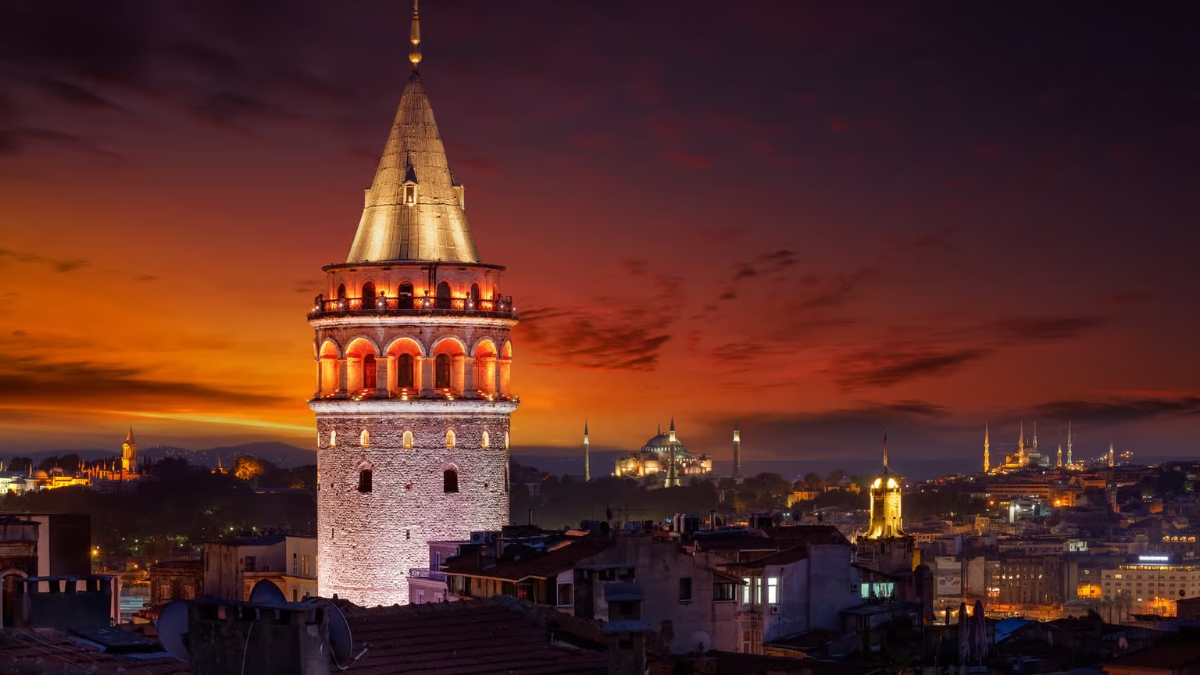
From Galata Tower’s 360-degree observation deck you can see, on a clear day, Hagia Sophia, the Blue Mosque, Topkapı Palace and the Süleymaniye Mosque across the Golden Horn to the south, the Galata Bridge directly below, the Bosphorus and the Asian shore to the east, and — in the distance — the Maiden’s Tower and the Prince’s Islands. The Golden Horn curves inland to the north-west.
Half the pleasure of Galata Tower is playing “spot the landmark” from the top. The 67-metre tower stands on the north side of the Golden Horn, looking straight across at the historic peninsula, so the great Ottoman and Byzantine monuments line up on the far shore like a skyline built for the view. But the panorama is a full circle, and plenty of visitors miss the sights behind them — the Bosphorus, the Asian shore and the water landmarks to the east.
This guide names the landmarks by direction, so you can walk the balcony knowing exactly what you’re looking at, from the domes of Sultanahmet to the Maiden’s Tower far out in the strait.
Landmarks by Direction at a Glance
| Direction | What you can see |
|---|---|
| South / south-west | Hagia Sophia, Blue Mosque, Topkapı Palace, Süleymaniye Mosque, historic peninsula |
| Directly below (south) | Golden Horn, Galata Bridge, Eminönü waterfront |
| East | The Bosphorus, ferries crossing to the Asian shore |
| South-east (distant) | Maiden’s Tower, Prince’s Islands, Sea of Marmara |
| North-west | The Golden Horn curving inland |
| Below (all around) | The tiled rooftops of Galata and Karaköy |
Visibility depends on the weather and haze, so the furthest landmarks — the islands and the Maiden’s Tower — are clearest on a bright, clear day. Confirm conditions and plan your visit around good light for the best chance of seeing them.
Looking South: the Historic Peninsula
The signature view from Galata Tower faces south across the Golden Horn to the historic peninsula, where Hagia Sophia and the Blue Mosque sit side by side above Sultanahmet, with Topkapı Palace on the point beyond and the vast Süleymaniye Mosque crowning the hill to the south-west. These four monuments form the classic old-city skyline seen from the tower’s balcony.
This is the direction most photographs are taken. Hagia Sophia and the Blue Mosque are the easiest to pick out, their domes and minarets rising together above the rooftops of Sultanahmet. Topkapı Palace spreads across the tip of the peninsula where the Golden Horn meets the Bosphorus, and the Süleymaniye Mosque dominates the ridge to the right, its scale unmistakable even at a distance.
To match each dome to its name and story, the English audio-guide app included with the Galata Tower entry ticket helps you orient yourself from the deck. For the deck layout itself and where to stand for this outlook, see our observation deck guide.
Directly Below: the Golden Horn and Galata Bridge
Look straight down to the south and the Golden Horn opens beneath you, the inlet that separates Galata from the old city. Spanning it is the Galata Bridge, usually lined with anglers, with the Eminönü waterfront and its ferry docks on the far bank. This is the busiest, most animated part of the view — a working harbour rather than a monument, alive with boats crossing between the two shores.
The bridge and the horn frame the peninsula neatly in photographs, so this near view often works better than zooming in on the distant domes. The rooftops of Karaköy and Galata directly below add foreground; our Galata neighbourhood guide covers the streets you’re looking down on.
Looking East: the Bosphorus and the Asian Shore
Turn east from the deck and the Bosphorus opens up — the strait dividing Europe from Asia. Across the water lies the Asian shore, with the districts of Üsküdar and Kadıköy, and ferries constantly crossing between the continents. On a clear day you can pick out the little Maiden’s Tower sitting on its islet in the strait, off the Asian side.
Many visitors, fixed on the old-city view, forget to look east — but this is the direction that captures what makes Istanbul unique, a city straddling two continents. The Bosphorus threads north-east towards the Black Sea, busy with ferries, tankers and fishing boats. Beyond it, the hills of the Asian shore rise across the water.
Out in the strait, the small Maiden’s Tower (Kız Kulesi) sits on its own islet off Üsküdar — a distinctive landmark that’s easiest to spot on a bright day. The changing light over the water here is a favourite for photographers; our photography guide covers shooting into it.
Into the Distance: the Prince’s Islands and Sea of Marmara
To the south-east, past the mouth of the Bosphorus, the Sea of Marmara stretches away, and on a clear day the Prince’s Islands appear as low silhouettes on the horizon. They’re a fair distance off, so haze often blurs them; a crisp, clear morning or a sharp autumn day gives the best chance of making them out.
This far view rewards patience and good weather more than any other. If seeing the full sweep to the islands matters to you, time your visit for clear conditions — our best time to visit guide notes the seasons and hours when visibility and light tend to be strongest.
Looking North-West: the Golden Horn Inland
Complete the circle and the Golden Horn curves away inland to the north-west, threading between the hills with the older neighbourhoods of Fatih and Balat rising on the far bank. It’s a quieter, less-photographed direction than the monument-packed south, but it gives a sense of the city’s geography — the long, sheltered inlet that made this a natural harbour for centuries and drew the Genoese to build the tower in the first place.
For the story of why the Genoese chose this high point above the horn, our Galata Tower history guide traces the tower from watchtower to museum.
Frequently Asked Questions
Can you see Hagia Sophia from Galata Tower?
Yes. Hagia Sophia is one of the clearest landmarks from the deck, visible to the south across the Golden Horn on the historic peninsula, its broad dome sitting close to the Blue Mosque above Sultanahmet. On a clear day it’s easy to pick out. A longer camera lens helps you isolate it from the surrounding old-city rooftops for a cleaner shot.
Can you see the Blue Mosque from Galata Tower?
Yes. The Blue Mosque stands right beside Hagia Sophia to the south, and the two are usually seen together from the tower, their domes and minarets rising above Sultanahmet across the water. They’re among the most recognisable shapes in the whole panorama and the anchor of the classic Galata Tower view of the historic peninsula.
Which landmarks can you see from Galata Tower?
On a clear day: Hagia Sophia, the Blue Mosque, Topkapı Palace and the Süleymaniye Mosque across the Golden Horn to the south; the Galata Bridge and Eminönü waterfront directly below; the Bosphorus and the Asian shore to the east; the Maiden’s Tower out in the strait; and, in the far distance, the Prince’s Islands. The Golden Horn curves inland to the north-west.
Can you see the Bosphorus from Galata Tower?
Yes. Look east from the deck and the Bosphorus opens up — the strait dividing Europe from Asia, busy with ferries and ships. Beyond it lies the Asian shore, with Üsküdar and Kadıköy. It’s the direction many visitors overlook while focused on the old city, but it captures Istanbul’s two-continent geography better than any other view from the tower.
Can you see Topkapı Palace and Süleymaniye Mosque?
Yes, both are visible to the south and south-west on a clear day. Topkapı Palace spreads across the tip of the historic peninsula, where the Golden Horn meets the Bosphorus. The Süleymaniye Mosque crowns the hill to the south-west, its great size making it easy to identify. Together with Hagia Sophia and the Blue Mosque they complete the old-city skyline.
Can you see the Maiden’s Tower and the Prince’s Islands?
On a clear day, yes, though both are distant. The Maiden’s Tower (Kız Kulesi) sits on its islet in the Bosphorus off the Asian shore to the south-east, best spotted in good light. The Prince’s Islands lie further out in the Sea of Marmara and appear as low silhouettes on the horizon — haze often hides them, so clear conditions give the best chance.
Is the view better in one direction than another?
The south-facing view of the historic peninsula is the most famous and the most photographed, but the deck is a full 360-degree circle, so it’s worth walking the whole balcony. The east view over the Bosphorus and Asian shore is arguably the more distinctive, and the near view down to the Galata Bridge and Golden Horn often photographs best. Each direction offers something different.
What affects how much you can see from the top?
Weather and haze are the main factors. The near landmarks — Hagia Sophia, the Blue Mosque, the Galata Bridge — are visible in most conditions, but the distant ones, especially the Prince’s Islands and the Maiden’s Tower, need a clear, bright day. Light matters too: early morning and the blue hour after sunset flatter the skyline. Plan around clear conditions for the fullest view.
