
Galata Tower History — Genoese Tower to Museum
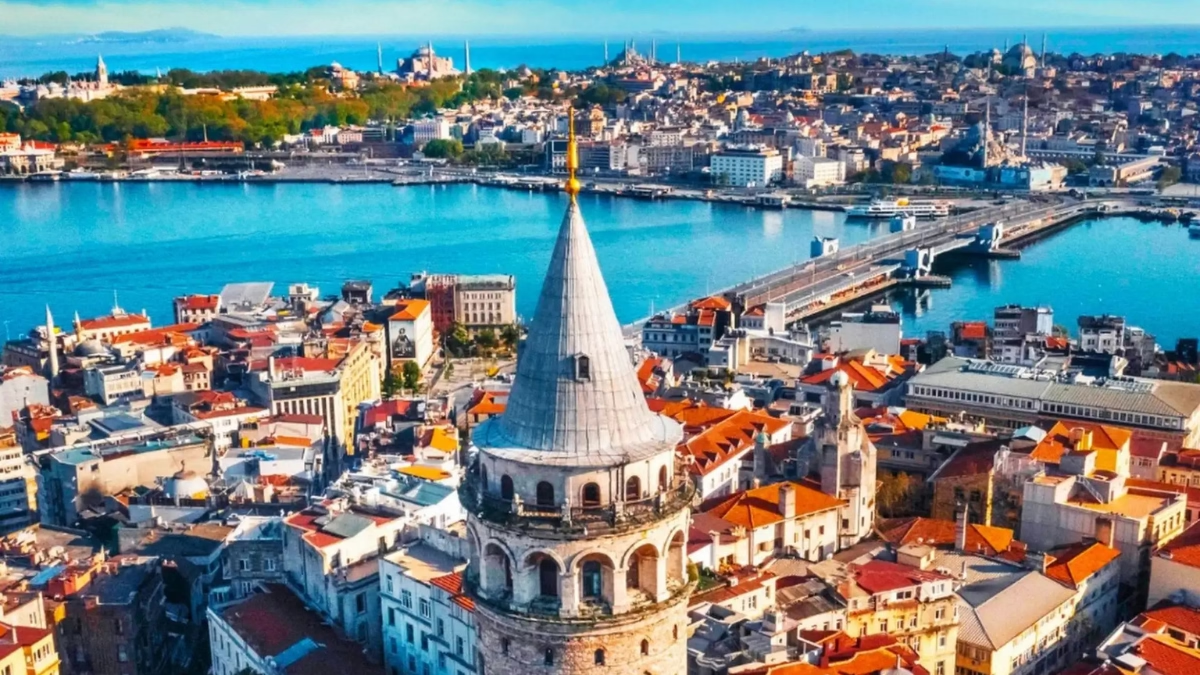
Galata Tower was built in 1348 by the Genoese as “Christea Turris” — the Tower of Christ — the high point of their fortified colony on the north side of the Golden Horn. After the Ottoman conquest it served for centuries as a fire-lookout, gained the legend of the aviator Hezârfen Ahmed Çelebi, survived earthquakes and repeated restorations, and reopened as a museum in 2020 under Turkey’s Ministry of Culture and Tourism.
Few buildings tell Istanbul’s layered story as neatly as Galata Tower. It began as a Genoese statement of power, passed into Ottoman hands as a practical watchtower, collected a flying legend along the way, and stands today — about 67 metres of cylindrical stone with a conical cap — as a museum and the city’s most photographed viewpoint. Nearly seven centuries have left their mark on it.
This guide traces that history in order: the medieval Genoese colony and the tower’s 1348 construction, the shift to Ottoman fire-lookout, the Hezârfen glide, the earthquakes and rebuildings, and the controversial modern restoration that produced the museum you visit now.
The Genoese Colony of Galata
In the 13th and 14th centuries the Genoese held Galata, a walled trading colony on the north shore of the Golden Horn, granted to them under agreements with the Byzantine Empire. Galata Tower was raised in 1348 as the tallest point of that colony’s fortifications, a symbol of Genoese commercial and military strength directly across the water from Constantinople.
To understand the tower you have to picture medieval Galata as a semi-independent enclave. The Republic of Genoa ran it as a trading base, ringed by walls, its merchants competing hard with Venice and doing lucrative business under the shadow of Byzantine Constantinople across the Golden Horn. The colony’s autonomy was always a delicate arrangement, and its defences mattered.
The tower crowned those defences. Completed in 1348 and originally called Christea Turris, the Tower of Christ, it was the highest structure in the walled town and a deliberate show of confidence — visible for miles and unmistakable from the Byzantine side of the water. That Genoese origin is why the tower’s story is so often told alongside the wider architecture of the tower, which still reflects its medieval military design.
Ottoman Conquest and the Fire-Lookout Years
After the Ottoman conquest of Constantinople in 1453, Galata passed to Ottoman control and the tower’s role shifted from colonial fortification to civic utility. For much of the Ottoman period it served as a fire-watch tower, its height used to spot the blazes that regularly threatened a city built largely of timber, with watchmen raising the alarm from the top.
The fall of Constantinople in 1453 ended Genoese Galata as an independent colony, and the tower entered its long Ottoman chapter. Rather than demolish it, the Ottomans put its most obvious asset — height — to work. In a city where fire was a constant and devastating threat, a tall stone tower with a clear view over the wooden neighbourhoods was invaluable, and Galata Tower became a fire-lookout, staffed by watchmen scanning the rooftops.
That practical role kept the tower standing and maintained through the centuries, even as its upper structure was altered by fire, storm and repair. The fire-watch function endured well into the modern era, tying the tower directly to the daily life and recurring disasters of Ottoman Istanbul.
The Legend of Hezârfen Ahmed Çelebi
One story more than any other clings to the tower. By a much-repeated 17th-century account, the polymath Hezârfen Ahmed Çelebi fashioned a set of artificial wings and launched himself from the top of Galata Tower, gliding across the Bosphorus to land on the Asian shore at Üsküdar. The tale comes down chiefly through the writings of the Ottoman traveller Evliya Çelebi.
Historians treat the account with due scepticism — the evidence is literary rather than documented — but the legend has become inseparable from the tower’s identity, celebrated in Turkish culture as an early dream of human flight. Whether or not any glide happened, it captures why the tower fires the imagination, and it is one of the stories the audio guide brings to life as you climb the floors.
Earthquakes, Fires and Restorations
Galata Tower has been damaged and repaired many times across its 700-year life. Fires burned its upper timber sections, storms toppled its cap, and Istanbul’s earthquakes took their toll, prompting repeated Ottoman and later Turkish restorations. The tower’s conical cap and upper floors in particular have been rebuilt more than once, so what you see today is the product of centuries of intervention.
The tower’s silhouette is not frozen from 1348. Over the centuries its crown was rebuilt after fires and a collapse, at various points carrying different roof forms before the conical cap familiar today. Each Ottoman repair adapted the structure to its current use, particularly the fire-watch function that demanded a serviceable lookout at the top.
In the 20th century the tower was restored again and fitted with an elevator to open it to visitors, cementing its role as a tourist viewpoint rather than a working watchtower. These layers of rebuilding are exactly why the tower’s fabric is a patchwork of eras — a point that becomes vivid once you are inside, floor by floor.
The 2020 Museum Reopening
The most recent chapter is also the most debated. A major restoration completed in 2020 transferred the tower to Turkey’s Ministry of Culture and Tourism and reopened it as a museum, with exhibition floors telling its story and the observation deck ticketed as a formal attraction. The work modernised access and interpretation and gave the tower a clear institutional home.
It also drew criticism. Conservation specialists and heritage bodies raised concerns about the methods and materials used and the impact on a historic monument, and the restoration became a talking point in wider debates about how Istanbul’s heritage is handled. Visitors today experience the result: a museum-managed landmark run in a daytime session and an evening “museology” session. For how those sessions and the shift break work in practice, see our guide to Galata Tower opening hours.
Frequently Asked Questions
When was Galata Tower built?
Galata Tower was built in 1348 by the Genoese, who held the walled trading colony of Galata on the north side of the Golden Horn. It was named Christea Turris, the Tower of Christ, and stood as the tallest point of the colony’s fortifications. Nearly seven centuries of fires, earthquakes and restorations have altered its upper structure since, but the medieval Genoese core dates to that 1348 construction.
Why did the Genoese build Galata Tower?
The tower was the high point of the fortifications defending the Genoese colony of Galata, a semi-independent trading enclave operating under agreements with the Byzantine Empire. As the tallest structure in the walled town, it served both a defensive and a symbolic purpose — a visible statement of Genoese commercial and military strength directly across the Golden Horn from Byzantine Constantinople, with which Genoa competed and traded.
What was Galata Tower used for under the Ottomans?
After the Ottoman conquest of Constantinople in 1453, the tower was kept and repurposed, most enduringly as a fire-lookout. In a city built largely of timber and repeatedly swept by fire, watchmen used the tower’s height to spot blazes and raise the alarm. This civic role lasted for centuries and is a large part of why the tower was maintained and repaired rather than lost.
Is the Hezârfen flight story true?
The story that Hezârfen Ahmed Çelebi glided from the tower across the Bosphorus on artificial wings comes from 17th-century writing, chiefly by the traveller Evliya Çelebi, and historians treat it as legend rather than documented fact. There is no firm contemporary evidence for the flight. Even so, the tale has become central to the tower’s identity and endures as a celebrated early dream of human flight.
Has Galata Tower been rebuilt over the years?
Yes, repeatedly. Fires damaged its upper timber sections, storms and a collapse affected its crown, and Istanbul’s earthquakes took their toll, prompting many Ottoman and later Turkish restorations. The conical cap and upper floors have been rebuilt more than once, and a 20th-century restoration added the elevator that opened the tower to visitors. What stands today reflects centuries of layered intervention on the 1348 base.
Why was the 2020 restoration controversial?
The restoration completed in 2020 reopened the tower as a state museum, but conservation specialists and heritage bodies criticised aspects of the methods and materials used and their effect on a historic monument. The debate became part of a broader conversation about how Istanbul’s heritage is managed. Visitors today see the outcome of that work, which also introduced the museum floors and the ticketed observation experience.
Who runs Galata Tower now?
Since the 2020 reopening, Galata Tower has been operated as a museum under Turkey’s Ministry of Culture and Tourism. It runs in a daytime session and an evening session, with a formal ticket for the observation deck. This is a change from earlier decades when the upper floors were known for a private restaurant and dinner-show operation rather than a state-managed museum.
How can I learn the tower’s history on a visit?
The museum floors and the included audio guide walk you through the Genoese origins, the Ottoman fire-watch years and the Hezârfen legend as you climb. For the Genoese context brought to life on foot, a Galata and Genoese guided tour explores the surrounding medieval quarter as well as the tower.
